As Memphis marked the 40th anniversary of the federal Martin Luther King Jr. Holiday, the University of Memphis highlighted its own civil rights legacy by honoring two individuals whose lives reflect the principles Dr. King championed: courage, service, and access to opportunity.
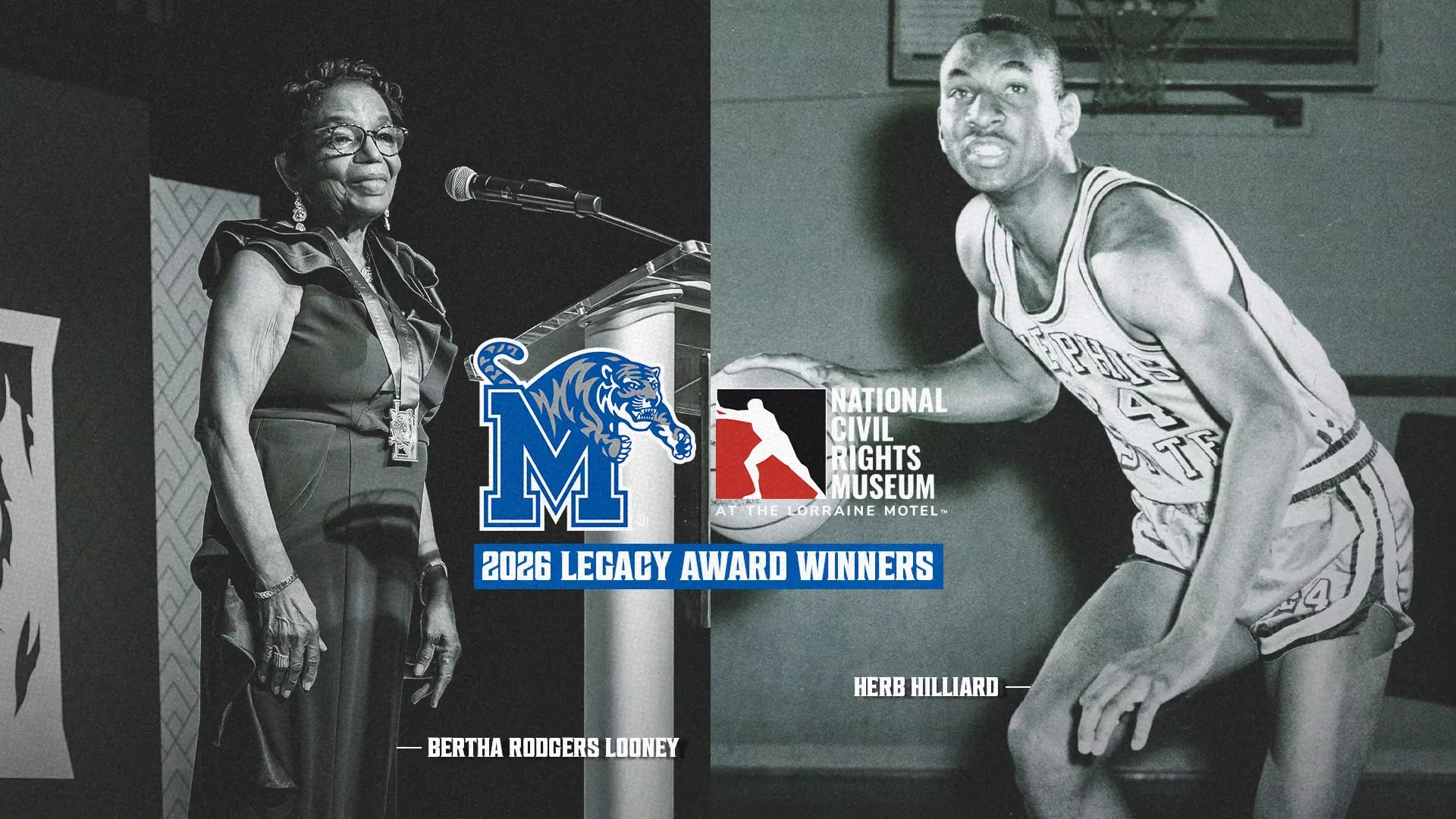
During the men’s basketball game against UTSA on January 18, Memphis Athletics presented the University of Memphis Legacy Award to Bertha Rodgers Looney and Herb Hilliard, recognizing their historic contributions to the institution and their lasting impact on the city of Memphis. The recognition was part of a broader King Day observance across the city, anchored by reflection, education, and community engagement.
The Legacy Award honors individuals whose actions embody Dr. King’s enduring ideals—education as a pathway forward, leadership rooted in service, and progress achieved through perseverance in the face of resistance.
Bertha Rodgers Looney: A Defining Moment in University History
Bertha Rodgers Looney’s legacy at the University of Memphis began in 1959, years before the institution would fully reflect the diversity of the city it serves.
That September, Looney became one of eight African-American students to integrate Memphis State University, a group now known as the “Memphis State Eight.” Their arrival marked a pivotal moment in the university’s history, occurring amid intense racial hostility and public resistance.
At just 18 years old, Looney and her peers faced extraordinary restrictions. They were limited to morning classes, required to leave campus by noon, barred from shared student spaces such as the cafeteria and student center, and often escorted to and from classes. Despite these conditions, they persisted—driven by the belief that education was worth the sacrifice.
Their courage reshaped the future of the institution. Today, African-American students make up more than one-third of the University of Memphis student population and serve in leadership roles across campus—a transformation made possible by the resolve of the Memphis State Eight.
Looney’s recognition during King Day served as both a reflection on the past and a reminder of the progress forged through bravery and resilience.
Herb Hilliard: Breaking Barriers On and Off the Court
Herb Hilliard’s connection to the University of Memphis represents another chapter in the institution’s civil rights story—this time through athletics.
A Millington native, Hilliard became the first African-American student-athlete to compete for Memphis State men’s basketball, playing from 1967 to 1969 during a period of social and institutional change. His presence on the court helped pave the way for generations of Tigers who would follow.
During his two seasons, Hilliard appeared in 37 games and emerged as a reliable contributor. As a sophomore, he ranked second on the team in rebounds and field goal percentage, finishing his career shooting over 50 percent from the field.
Beyond basketball, Hilliard built a distinguished professional career after earning a degree in personnel administration and industrial relations from Memphis State. His leadership extended into civic life through service with national and state banking associations, the Memphis-Shelby County Airport Authority, and the National Civil Rights Museum, where he served as chairman.
In 2009, his contributions were further recognized with the M Club’s Billy J. Murphy Award, honoring former student-athletes who have made significant professional and community impacts.
A Shared Legacy Aligned With King Day
While Looney and Hilliard’s paths at the University of Memphis were different, their stories intersect through a shared commitment to breaking barriers and serving the community. Their recognition during the 40th anniversary of King Day underscored the university’s role in the broader civil rights movement and its ongoing responsibility to carry that legacy forward.
The honors also aligned with Memphis Athletics’ continued partnership with the National Civil Rights Museum, reinforcing the connection between education, history, and civic engagement.
As part of that partnership, a special ticket package was offered to fans, combining admission to the January 18 game with entry to the National Civil Rights Museum. A portion of the proceeds supports the Museum’s mission to preserve and advance the legacy of the Civil Rights Movement.
The partnership culminated during the Museum’s Martin Luther King Jr. Day celebration on January 19, when the Museum offered free admission, educational programming, and service opportunities in commemoration of the holiday’s 40th year.
Together, these moments reflected how the University of Memphis continues to honor Dr. King’s legacy—not only through remembrance, but through action, education, and recognition of those who helped move the city and institution forward.