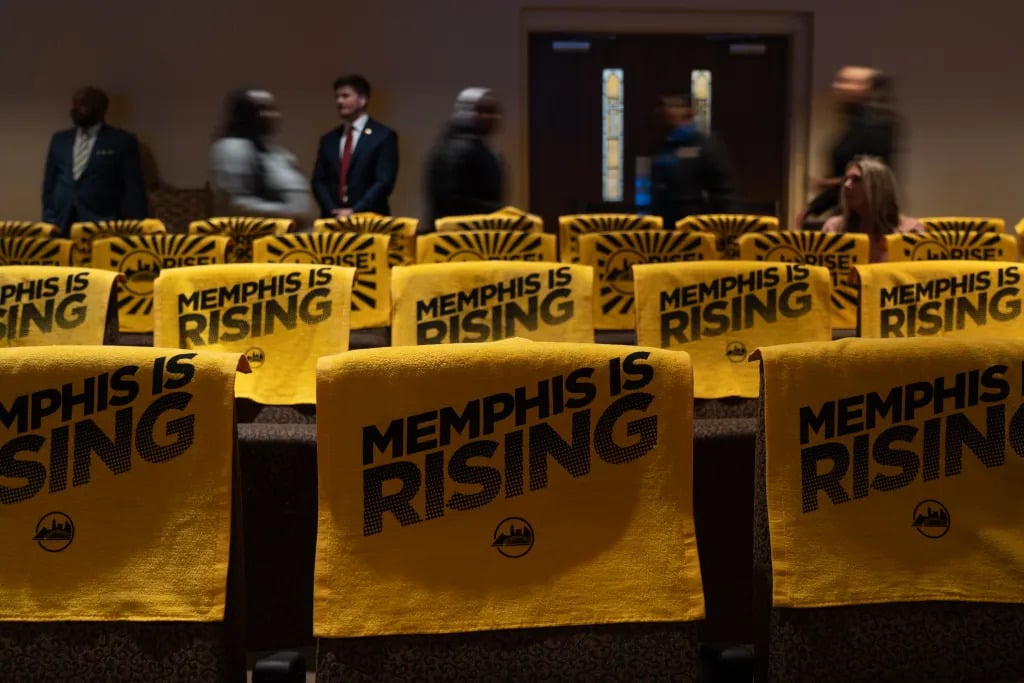
At his annual State of the City address, Mayor Paul Young outlined a vision centered on public safety progress, housing growth, youth opportunity, and culture as a driver of economic momentum, emphasizing that Memphis is rising with intention.
From historic reductions in serious crime to a commitment to building 10,000 new homes in the city’s core by 2030, the mayor framed this moment as a turning point grounded in coordinated action across city departments, community partners, and neighborhoods.
By the Numbers
- 40%: Serious crime reduction goal reached two years early
- 10,000: New affordable and market-rate homes in the core by 2030
- 3,000: Paid summer jobs each year starting now (minimum $17/hour)
- 5,000: Young adults on durable career pathways by 2030
- ~126: New rental and ownership homes moving into service
- 68: Vacant lots in the initial small-developer housing pipeline
Crime Reduction Reaches Goal Two Years Early
Public safety remains the administration’s top priority.
Mayor Young shared that Memphis reached its four-year goal of reducing serious crime by 40 percent — two years ahead of schedule. According to the Mayor, serious crime levels are now the lowest the city has seen in roughly 25 years.
He credited focused planning, cross-agency coordination, and consistent neighborhood-level work with partners across the city.
“Safety isn’t luck — it’s strategy, discipline, and daily work with our neighbors.”
– Mayor Young
While acknowledging that too many families have still experienced loss, the mayor emphasized that the work continues. Next steps include sustaining prevention efforts, supporting investigators and victims’ families, and pairing enforcement with environmental improvements like blight removal, lighting upgrades, and street design that help prevent crime before it happens.
A Structural Challenge — and a Strategy to Grow Upward
Mayor Young also addressed a long-term structural issue: Memphis declined from approximately 650,000 residents in 2000 to roughly 615,000 today while spanning nearly 300 square miles. Fewer taxpayers across a large geographic footprint make service delivery and transit more challenging.
The administration’s strategy: grow upward, not outward.
By concentrating investment in the urban core, the city aims to build neighborhoods where families can live, work, and thrive within reach of daily life — with housing, retail, jobs, schools, and services closer together. The goal is to strengthen both quality of life and fiscal sustainability.
10,000 Homes in the Core by 2030
Housing was presented as the foundation of Memphis’ next chapter.
Mayor Young committed to delivering 10,000 new affordable and market-rate homes in the city’s core by 2030. To reach that goal, the administration will:
- Bring a streamlined development code to City Council in the coming months
- Align public, private, and philanthropic capital through a cooperative delivery structure
- Coordinate a unified housing pipeline with shared accountability
Early proof points are already visible:
- Long-vacant land is being assembled in North Memphis, Boxtown, Westwood, Whitehaven, Binghampton, and along Broad Avenue
- A home repair program is helping stabilize neighborhoods and support residents who want to remain in place
- Approximately 126 rental and ownership homes are moving into service across South Memphis, North Memphis, and Orange Mound
- Emerging local developers, supported by the Memphis CRA, are converting vacant lots into needed housing through an initial 68-lot pipeline
- Legal and code tools are addressing long-standing hazards, including the demolition of the Somerset Apartments
“Housing is the foundation — customers for local businesses, a workforce for employers, and the density our corridors need to thrive.”
– Mayor Young
Mayor Young emphasized that housing production must be paired with access — ensuring current residents can afford and benefit from new opportunities.
Youth Pathways Built Around Real Jobs
A central pillar of the address focused on youth opportunity and workforce alignment.
The city will create 3,000 paid summer jobs each year beginning this year, with wages starting at no less than $17 per hour. By 2030, the goal is to place 5,000 young adults on sustained career pathways.
The strategy begins with employer commitments first — aligning training with real job openings in sectors where Memphis is already strong, including technology, healthcare, skilled trades, education, and hospitality.
Programs will include technical instruction, coaching, soft skills development, entrepreneurship opportunities, and wealth-building models such as employee ownership.
Culture as an Economic Engine
Mayor Young positioned culture as a serious economic driver, reinforcing Memphis’ identity as a source city for American music, food, and movement.
Investments in community anchors were highlighted as examples of how infrastructure builds pride and attracts growth, including:
- A new certified public library in Frayser
- The state-of-the-art Lester Community Center, opening in 2025
- Property activations along Broad Avenue and faith-led community spaces
- Civic-centered redevelopment underway at the Southwest Twin Site in Westwood
Across these efforts, the city continues modernizing infrastructure and advancing complete streets to improve safety, access, and long-term development alignment.
Modernizing City Services
Operational improvements were also noted. Memphis Animal Services has returned to full open intake for the first time since 2019, reflecting service stabilization. Mayor Young also credited frontline city crews who maintain streets, address infrastructure needs, and serve residents daily.
A public-facing dashboard tracking crime trends, housing pipeline progress, neighborhood projects, and youth outcomes is planned to increase transparency and accountability.
More Initiatives on the Horizon
In addition to the priorities outlined during the address, several other initiatives are moving forward through city government — reinforcing Memphis’ identity as a city rooted in creativity and innovation.
One example is Memphis Music Live 365, a new digital platform that highlights the people, places, and organizations that make up Memphis’ music ecosystem. Managed by the City’s Office of Creative and Cultural Economy, the application allows users to explore a growing music asset database — connecting artists, venues, professionals, and community stakeholders in one centralized space.
The initiative reflects a broader effort to support Memphis’ creative infrastructure year-round, ensuring the city’s cultural influence continues to translate into opportunity, visibility, and economic growth.
A City Building Its Next Chapter
Closing the address, Mayor Young reiterated key commitments: sustain public safety gains, deliver 10,000 new homes in the core by 2030, create 3,000 paid summer jobs annually, and place 5,000 young adults on durable career pathways.
But beyond the metrics, the message was about momentum.
Memphis’ story has always been one of resilience and reinvention. With clear goals and coordinated action, this next chapter is about building a city that works — for neighborhoods, for families, and for the next generation.