Memphis Is Still Hot: The City’s Music Resurgence Is Real, It’s Now, and It’s Unstoppable
In Memphis, the rhythm never stops — and at 87 years old, Pastor Juan Shipp is living proof.
Dressed in pressed purple silk, Shipp leans toward the studio glass at Southern Grooves — a recording space carved into the bones of a once-abandoned Sears building in Memphis — and listens as the Jubilee Hummingbirds fill the room with organ-drenched grooves and warm guitar. The sound swells like a Sunday sermon. Shipp smiles, nods slowly.
“You hear that?” he asks.
You’d be forgiven for thinking this is a scene from Memphis history. It isn’t. It’s happening right now — and it’s the perfect metaphor for a city that has never stopped creating, even when the world stopped paying attention.
Quick Answer: What Is Memphis’ Music Scene Like Right Now?
Memphis, Tennessee — widely recognized as the Cradle of American Music and birthplace of blues, soul, rock ‘n’ roll, and gospel — is in the middle of a genuine cultural and economic resurgence. Key facts:
- Memphis’ music ecosystem generates over $720 million annually and supports more than 5,000 jobs, per a 2024 Sound Diplomacy report
- Two major new live music venues opened in 2025: the 4,500-seat Grind City Amp and Live Nation’s 1,300-seat Satellite Music Hall
- Memphis-based GloRilla is one of the biggest rappers on the planet
- Royal Studios in South Memphis recently helped produce the Grammy-winning soundtrack for the film Sinners
- The city’s Overton Park Shell — where Elvis Presley performed his first rock ‘n’ roll show in 1954 — is celebrating its 90th anniversary with a series of events spotlighting local musicians
A Living Legend and the Label That Refused to Die
Pastor Juan Shipp’s story is Memphis’ story — full of bold swings, long silences, and unlikely comebacks that hit harder for the wait.
Back in the 1960s, Shipp was a part-time DJ spinning gospel 45s on local radio. Inspired by the quality sound coming out of iconic Stax Records just miles away — home to Otis Redding, Sam & Dave, and Isaac Hayes — Shipp set out to elevate the soul-drenched gospel he loved. Most groups at the time, he said, sounded like they were “singing in a well.” He set up shop above a downtown sandwich joint and got to work.
By 1972, Shipp had launched D-Vine Spirituals, a label that over the next dozen years recorded more than 200 acts, including Elizabeth King & the Gospel Souls. His production philosophy was unapologetically Memphis: wah-wah guitar, a tight rhythm section, and a demand for authentic feeling. In the studio, he once urged a singer to perform as if she were “making love to God.”
The music was extraordinary. The timing, eventually, wasn’t. By the mid-1980s, the industry shifted, the city’s core entered a slump, and Shipp stepped back into daily ministry. The studio went quiet. His masters went into a shed.
Then — nearly three decades later — a writer came knocking. Those recordings were unearthed, reissued around 2020 to widespread critical acclaim, covered by NPR, and became the subject of a documentary. The Memphis sound Shipp had crafted in near-anonymity suddenly had the audience it always deserved.
Today, Pastor Juan Shipp is a partner at the Bible & Tire label, making new records at a Grammy-winning studio and hosting a weekly DJ show. He didn’t just survive the city’s difficult chapters — he’s thriving in its newest one.
“Memphis,” Shipp declares, “is still hot.”
New Venues, New Energy, New Opportunities to Grow
Bold ideas are becoming real community impact across Memphis right now — and nowhere is that more visible than in its live music infrastructure.
As the sun goes orange-pink over the Mississippi River, promoter Nick Barbian is at the edge of something big. His phone buzzes nonstop — a WiFi hiccup here, a VIP greeting there — as a line of people streams into the first major show at Grind City Amp, a 4,500-seat riverside venue six years in the making. Tonight’s act: Alabama Shakes. The crowd is electric.
For Barbian, the venue isn’t just a building — it’s proof of concept. “We’re trying to figure out how we can celebrate the history of Memphis,” he said, while building “new opportunities and grow the future of music in Memphis, so that the story continues on.”
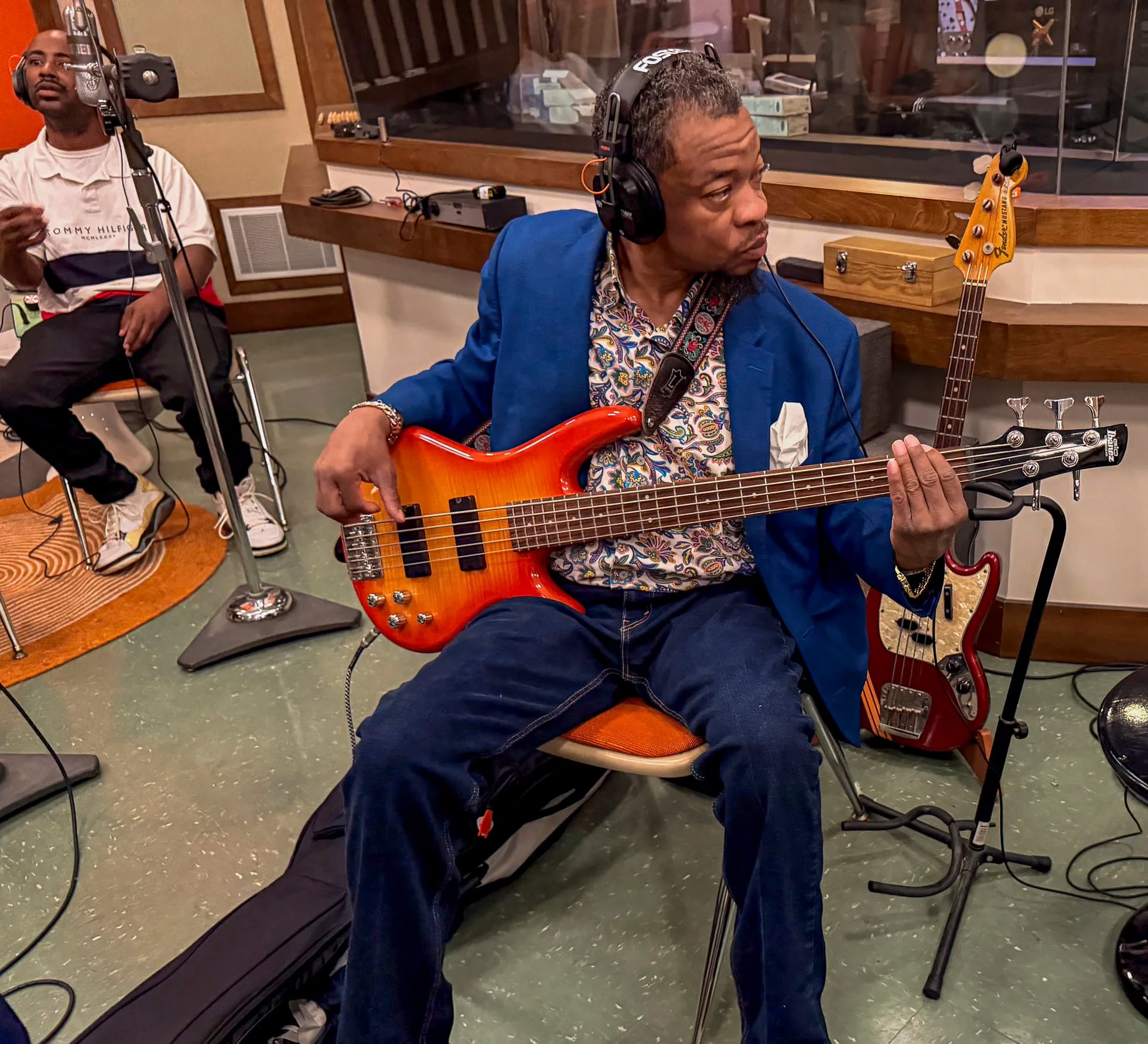
Nearby at the show stands Dywane Eric Thomas Jr. — better known as MonoNeon, the Grammy-winning bassist raised in Memphis who tours globally and counts Prince as one of his most prominent collaborators. He loves Memphis, still lives here, but acknowledges a real tension: the city can be “too stuck in tradition.” He’s watching the Grind City opening with cautious optimism. “If stuff like this keeps happening, it’ll keep growing. But it’s been slow.”
That tension is the heartbeat of the city’s current moment: how do you honor the legacy without being imprisoned by it?
Memphis Music by the Numbers: The Economic Case for Belief
The cultural comeback has data behind it. In 2024, consultancy Sound Diplomacy released a comprehensive music strategy report commissioned to help guide Memphis’ future. Its findings revealed a music economy that is substantial — and substantially underutilized.
Memphis’ music ecosystem generates over $720 million per year, supports more than 5,000 jobs, and encompasses roughly 1,100 music-related assets citywide — from historic museums and recording studios to nonprofits and live venues. At the same time, 59% of Memphis musicians were considering leaving the city due to lack of support, and even more reported that earning a living from music felt out of reach.
Mayor Paul Young created the Memphis Office of Creative and Cultural Economy in 2024, appointing DeMarcus Suggs as its director — an explicit signal that Memphis’ musical identity is not a heritage project, but an economic strategy. Suggs’ office is working to align government, nonprofit, and business resources to develop more production spaces, expand distribution opportunities, and keep local talent rooted.
Key initiatives include the Crosstown Sync licensing program, which works to place Memphis artists’ music in Netflix shows, films, and commercials, and Music Export Memphis, a nonprofit providing touring and marketing grants to local musicians.
“Music is our largest cultural export,” Suggs said. “This is kind of our big bet, from the city’s perspective.”
Royal Studios: Where the Memphis Sound Never Stopped
Pull up to Royal Studios in South Memphis — tucked into a lower-income neighborhood that carries the weight and warmth of the city’s history — and you’re stepping into a place that has never once gone quiet.
Lawrence “Boo” Mitchell runs Royal now, just as his father Willie Mitchell did before him. The studio’s sloping floor hints at its former life as a movie theater. Under yellow ceiling insulation that hasn’t changed in decades, a Hammond organ sits beside a drum kit and a microphone once used by Al Green, who recorded some of his most enduring hits here in the 1970s. A wall in the hallway is covered in artist signatures — Robert Plant, Wu-Tang Clan, and more.
When Willie Mitchell died in 2010, the phone at Royal went silent. Boo Mitchell had to prove himself on his own terms. The turning point came through Take Me to the River, a documentary and companion album that required Mitchell to record the likes of William Bell, Bobby Rush, Snoop Dogg, and Terrence Howard — and proved his voice as a producer in his own right. “That project just changed my life,” he said. “The floodgates just opened.”
What followed: Boz Scaggs, Mark Ronson, and the now-legendary 4 a.m. session in 2014 when Ronson brought in Bruno Mars to lay down a vocal track at Royal — a track that would become “Uptown Funk,” winner of the Grammy for Record of the Year.
More recently, Mitchell helped craft the Mississippi Delta blues soundtrack for Ryan Coogler’s Sinners, which earned the Grammy for Best Compilation Soundtrack for Visual Media.
“The lightning keeps striking,” Mitchell said, “because there’s magic and spirit here.”
The Present Tense: Memphis’ Deep Bench of Living Artists
When people think of Memphis music history, they picture Stax. Elvis. Beale Street. But bold murals fill the streets today because the innovators are still here, still creating.
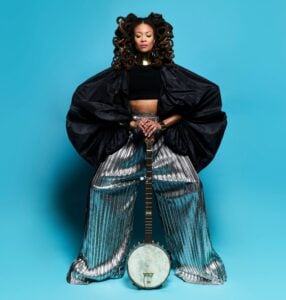
GloRilla — born Gloria Hallelujah Woods in North Memphis — is one of the biggest rappers in the world right now. Bassist and multi-instrumentalist MonoNeon has built an international reputation from Memphis’ zip codes. Marcella Simien, daughter of a zydeco musician and a Memphis transplant since age 18, performs alongside artists like Janelle Monáe and credits the city’s musical legacy as foundational to her work.
“When people think of Memphis, they only think of the history,” Simien said, “and maybe they’re not thinking about the vital present of the artists who are creating here — who are genre-bending and doing really innovative things musically and artistically.”
That present includes:
- Goner Records and its annual Gonerfest, anchoring an underground punk rock and garage psych scene
- The Hood Rave, a thriving DJ series organized by singer Talibah Safiya
- Porchfest in the Cooper-Young neighborhood, where residents perform front-porch concerts of rock, punk, and hip-hop to overflowing crowds
- Memphis Listening Lab, a repository of 60,000 records at the Crosstown Concourse, where anyone can sink into a leather sofa and explore Memphis blues or the latest hip-hop phenom — or record a podcast in a free studio
- WYXR, a nonprofit community radio station broadcasting from inside the Crosstown Concourse, helmed by co-founders Jared “Jay B.” Boyd and Robby Grant — Boyd also writes, DJs, and produces the Beale Street Caravan podcast
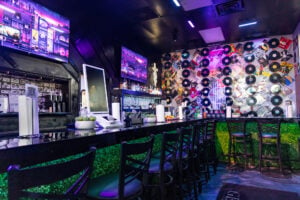
- Eight & Sand, the lounge at the historic Central Station Hotel, where nationally known DJs spin free sets beneath a 30-foot wall of high-end speakers
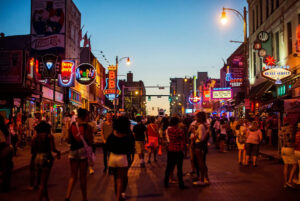
And tourists still flock to the monuments: Beale Street’s blues bars, Isaac Hayes’ custom Cadillac Eldorado at the Stax Museum of American Soul Music, Elvis’ 14-acre Graceland estate, and the city’s oldest music tourism site, Sun Studio.
“There’s endless interesting, unique artistic things happening here,” Simien said. “There’s definitely a spirit of hope and revitalization.”
Overton Park Shell at 90: Where Elvis First Shook His Hips
On July 30, 1954, a nervous young singer with jet-black hair, pink-striped pants, and a bow tie walked onto the stage of the Overton Park Shell in Memphis. He was opening for yodeler Slim Whitman at the “Hillbilly Hoedown.” He was so unknown the playbill had his name spelled as Ellis Presley.
He forgot the lyrics. So he shook his hips. The crowd went wild.
“Whatever you did, do it again!” the promoter told him. And Elvis Presley went back for an encore, and eventually, an icon.
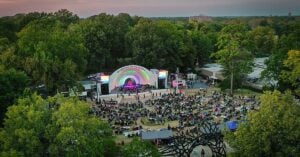
This year, the Overton Park Shell — a WPA-era bandshell carved into a sloping green lawn — celebrates its 90th anniversary. The Shell has seen its own near-misses: in 1969, a plan to route Interstate 40 through Overton Park nearly claimed it forever. Thomas Boggs, a drummer for The Box Tops, chained himself to the stage and played music for 48 hours straight. The highway eventually rerouted.
Today the Shell hosts concerts that celebrate living local musicians alongside its storied past — a perfect symbol for everything Memphis is trying to do.
Memphis Will Keep Playing
Soulful flavors, raw history, and a next generation drawing inspiration from these streets — that’s Memphis right now. This city, the cradle of American music, has always written its story on its own terms, even when overlooked, even when counted out.
Pastor Juan Shipp knows that better than anyone. Back in the 1970s, his D-Vine label held a weekly Wednesday gospel show at the Overton Park Shell. He’s glad the Shell is still going. He’s glad he is too.
Memphis music resurgence isn’t a forecast. It’s already underway — in the studios, the venues, the grant programs, the porches, and the people who never left.
Get ready to bring your soul.