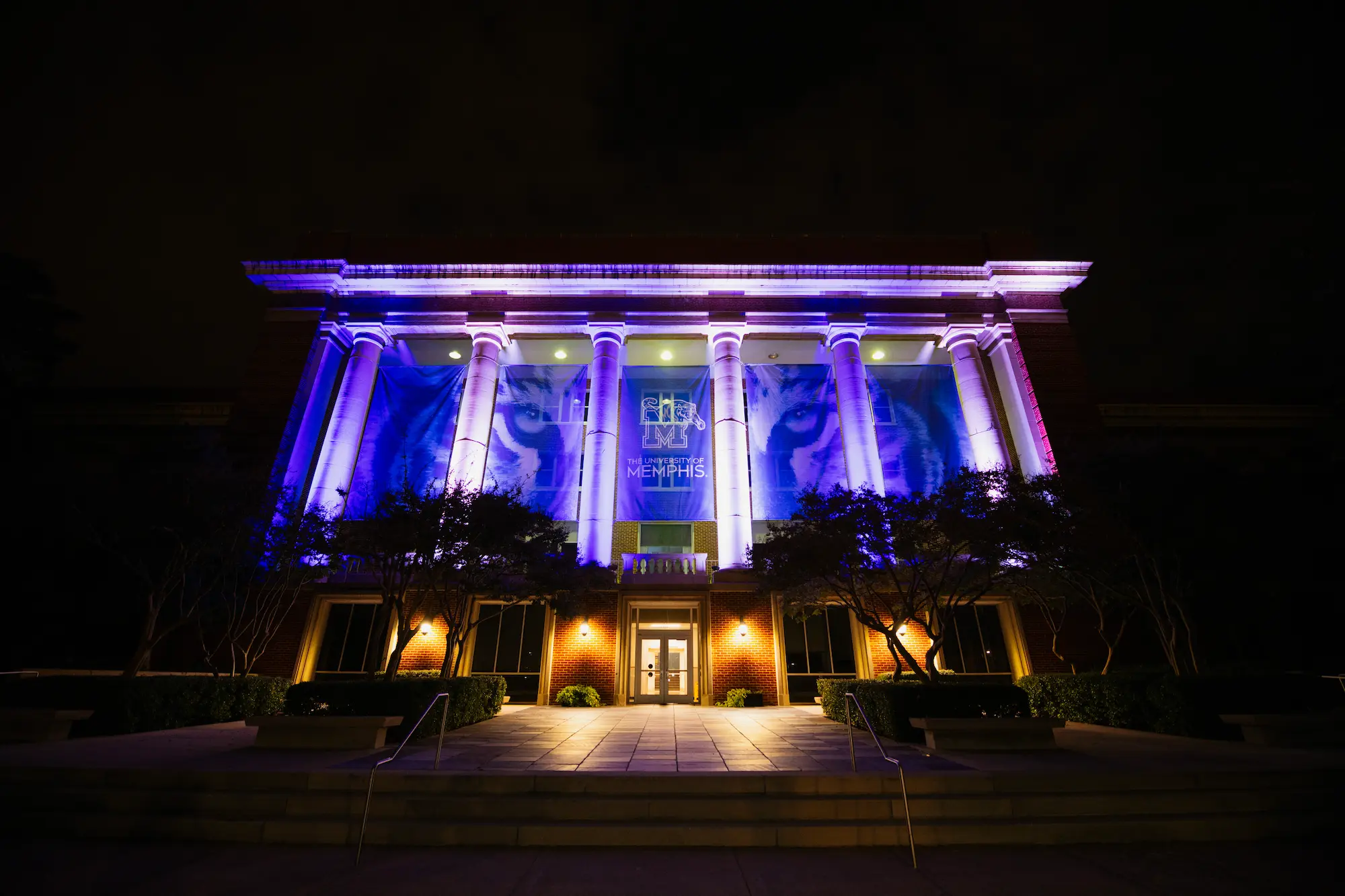
At The University of Memphis, Black history is not a sidebar to the story — it is central to it.
From the students who first integrated the University to the civil rights leaders and student organizations shaping campus today, generations of courage and commitment have defined what this institution stands for.
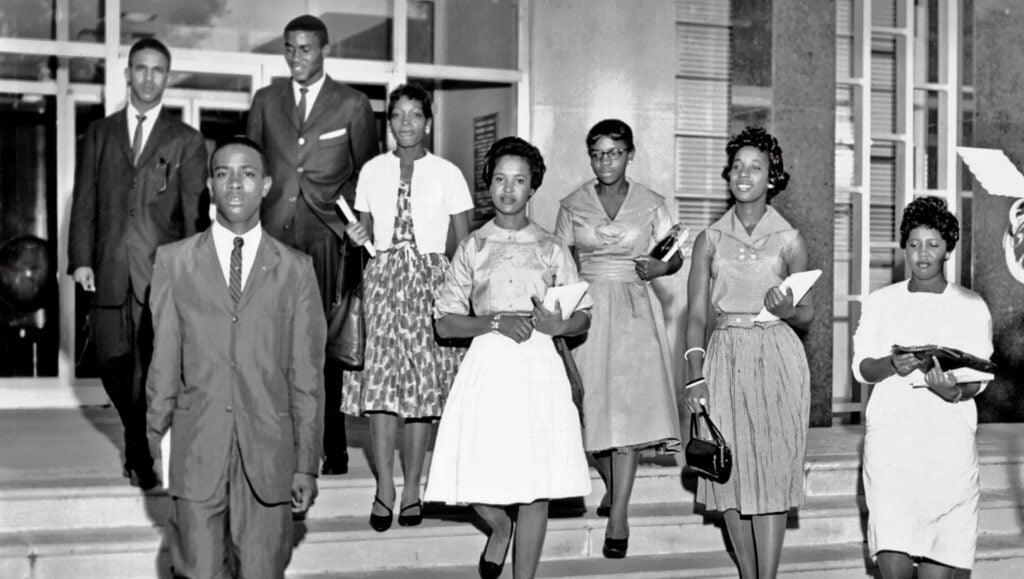
The Memphis State Eight
In the fall of 1959, eight African American students quietly changed the course of Memphis history.
Known as the Memphis State Eight, Bertha Mae Rogers (Looney), Rose Blakney (Love), Marvis Kneeland (Jones), Luther McClellan, John Simpson, Ralph Prater, Eleanor Gandy, and Sammie Burnett (Johnson) became the first Black students to integrate then-Memphis State University.
Their enrollment came with restrictions. They were barred from the cafeteria and student center, prohibited from ROTC and physical education classes, escorted by police to morning-only classes, and required to leave campus by noon. Separate lounges and restrooms were designated for them. Though they did not face physical violence, they endured isolation and public taunting.
Still, they persevered.
Their presence set the University on a path toward greater equality and inclusion. In 2009, the group received the Arthur S. Holman Lifetime Achievement Award in recognition of their historic impact.
Because of them, access expanded. Because of them, opportunity grew.
The Leadership of Dr. Benjamin L. Hooks
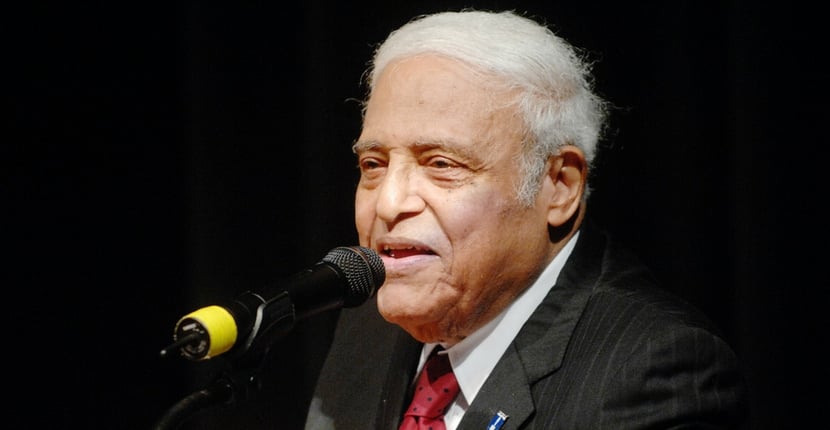
That commitment to justice found powerful expression in the life of Benjamin L. Hooks.
Born in Memphis in 1925, Hooks served in World War II before earning his law degree and returning home to challenge segregation in Tennessee. He became the first African American criminal court judge in a court of record in the state, later the first Black appointee to the Federal Communications Commission, and in 1976, executive director of the NAACP.
Under his 15-year leadership, the NAACP regained national momentum and expanded its membership by hundreds of thousands. In 2007, Hooks received the Presidential Medal of Freedom for his lifelong commitment to fairness and opportunity.
His legacy continues through the Benjamin L. Hooks Institute for Social Change at the University of Memphis, founded in 1996 to advance social change and strengthen democracy through research, community engagement, and historical preservation.
Now celebrating 30 years in 2026, the Institute partners across sectors to address disparities in education, economic mobility, health, and civic life — ensuring that scholarship and service remain connected to real community impact.
Changing the Game in Athletics
Progress also took shape on the field.
In 1968, Glenn Rogers Sr. became the first Black football player at Memphis State after joining the team as a walk-on. Alongside teammate Stan Davis, he later became one of the first Black players to appear in a game for the Tigers.
In 2024, the City of Memphis honored Rogers by renaming a street near the stadium where he once played — a tribute to the courage it took to step onto that field more than five decades earlier.
His legacy paved the way for generations of student-athletes and reflects the broader evolution of the University itself.

A Legacy That Lives On
Today, that history is not simply remembered — it is lived.
The University’s National Pan-Hellenic Council (NPHC) serves as the governing body for its traditionally African American fraternities and sororities. Originally formed in 1930 at Howard University, the NPHC unites historically Black Greek-letter organizations founded during a time when African Americans were denied equal rights and access.
At the University of Memphis, chapters including Alpha Kappa Alpha Sorority Inc, Delta Sigma Theta Sorority Inc, Kappa Alpha Psi Fraternity Inc, Omega Psi Phi Fraternity Inc, Phi Beta Sigma Fraternity Inc, Sigma Gamma Rho Sorority Inc, and Zeta Phi Beta Sorority Inc continue that tradition through scholarship, service, leadership, and civic engagement.
Academic spaces also carry the work forward. The University’s African and African American Studies program offers an interdisciplinary major grounded in history, theory, research, and a culminating capstone experience. Students explore the African and African American experience through coursework in the humanities, social and behavioral sciences, and the arts — with opportunities for global study that connect Memphis to the wider diaspora.
Black Legacy Lives Here
The story of The University of Memphis is one of resilience and forward movement — shaped by students who endured isolation, leaders who challenged systems, athletes who broke barriers, and organizations that continue building community.
Black legacy at the University is not confined to the past.
It lives in classrooms and research institutes.
On the yard and in service projects.
In scholarship, leadership, and everyday courage.
And it continues to shape the future of Memphis.