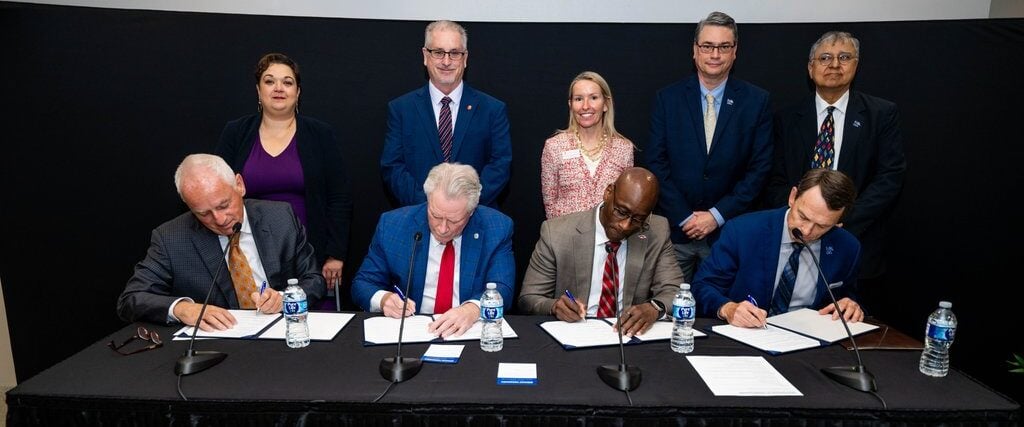
A new regional partnership is positioning Memphis and the Mid-South as a growing hub for artificial intelligence innovation.
According to reporting from the Memphis Business Journal, four major institutions—University of Memphis, University of Arkansas, University of Mississippi, and University of Tennessee Health Science Center—have joined forces to launch the Mid-South AI Research Consortium.
Announced on April 20, the initiative aims to unify the region’s artificial intelligence capabilities and further establish the Mid-South as a leader in areas like transportation, energy, and advanced computing.
“The Mid-South Delta region has been attracting significant AI data center investment,” said Jasbir Dhaliwal in a statement shared with the Memphis Business Journal. “This collaboration…positions our tri-state region as a strong national hub for the exponential growth of AI, both as a science and economic development engine.”
The consortium is designed to create a collaborative research environment, allowing faculty and students across institutions to pursue joint grant opportunities and share digital resources through a streamlined, “low overhead” model.
Beyond research, the initiative places a strong emphasis on workforce development—expanding opportunities for both current students and the broader Mid-South community as demand for AI talent continues to grow.
“Artificial intelligence is creating new possibilities in fields that are critically important to the Mid-South,” said Charles Robinson in the release. “By working together, our universities can help establish the region as a leader in AI innovation while strengthening key industries… and improving lives across the Mid-South and beyond.”
Key Focus Areas
The consortium will focus on five primary areas of research and development:
- Rural and precision health
- Supply chain and logistics
- Energy and data centers
- Agriculture and food security
- National defense
As Memphis continues to grow its footprint in technology and innovation, partnerships like this signal a broader shift—one that connects research, talent, and industry to shape the future of the region.